The Crooked Tree
The wisdom of being left alone

From The Wisdom of Laotse
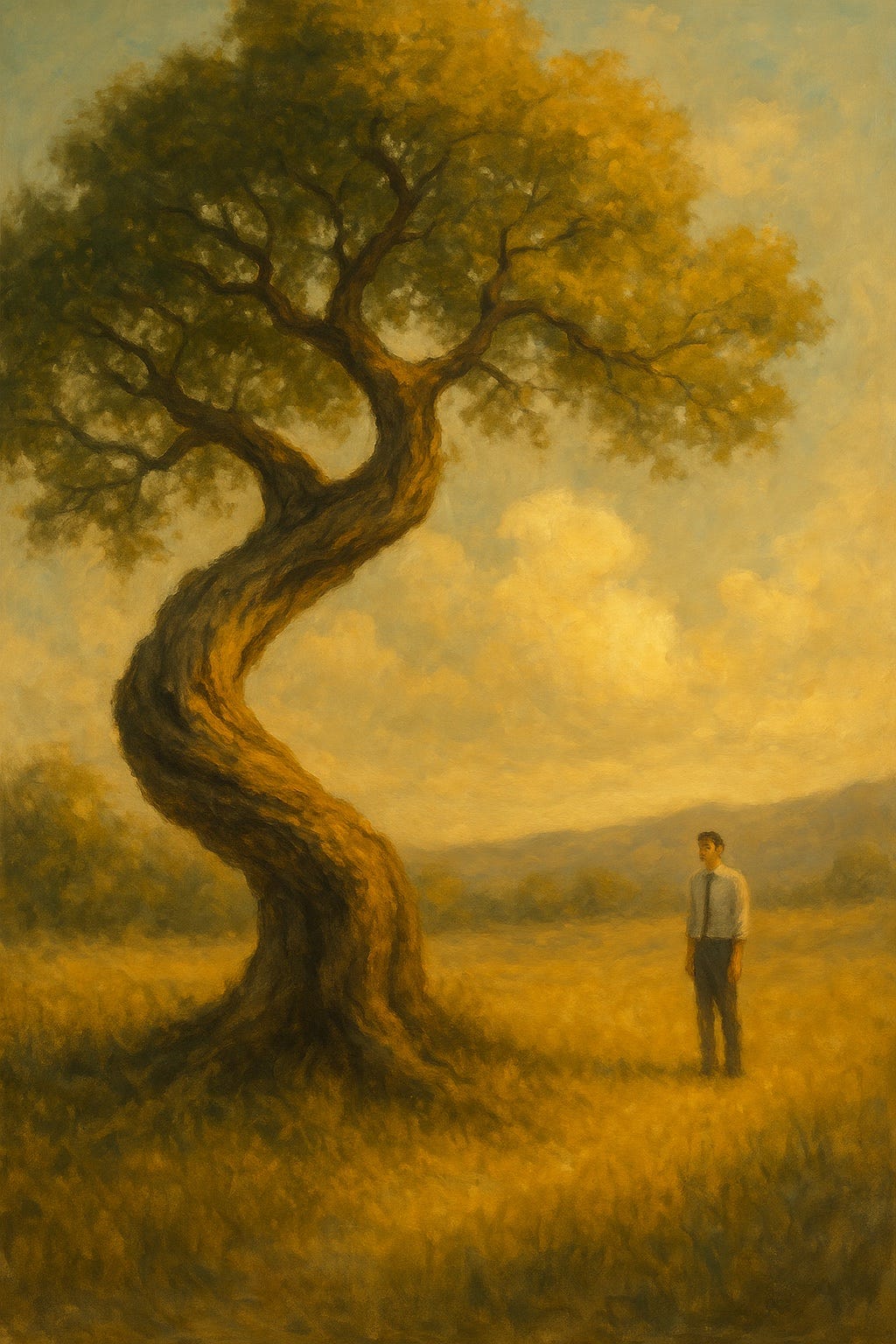
Tsech’i of Nan-po was traveling on the hill of Shang when he saw a large tree that astonished him. A thousand chariots could rest under its shade.
“What tree is this?” he said. “Surely it must be unusually fine timber.”
But when he looked closer, he saw that its branches were too crooked for rafters, and its trunk was twisted and full of loose grain, useless for coffins. He tasted a leaf, but it burned his lips. Its scent was so strong that it could intoxicate a man for three days.
Then Tsech’i said, “This tree is good for nothing. And that is how it has attained this size. A spiritual man might well follow its example of uselessness.”
I’ve seen this lesson play out in every system I’ve lived in. In the military, the most competent soldiers were given the hardest tasks while others coasted. In corporations, the most reliable people are loaded with extra work until they burn out. In families, the responsible ones are leaned on to hold everything together. The most useful get used the most.
It takes time to see how these patterns work. At first, being needed feels like purpose. Later, it can start to feel like captivity. You become the straight tree in a forest of bent ones, valuable to everyone but yourself.
The crooked tree, Chuangtse said, is free precisely because no one finds a use for it. It is allowed to live its full life, uncut and unclaimed.
Laotse’s teaching wasn’t an argument for laziness or withdrawal. It was a call for balance. Be strong, but not so serviceable that you lose your shape. Be kind, but not so accommodating that you vanish.
It is better to be whole than to be useful.
First 🥇 Born Captivity in Family True... Love, Ganga 🪔🕊️