Rulers
Leadership that leaves no trace

Rulers
Of the best rulers
The people (only) know that they exist;
The next best they love and praise;
The next they fear;
And the next they revile.When they do not command the people’s faith,
Some will lose faith in them,
And then they resort to oaths!But of the best when their task is accomplished,
their work done,
The people all remark, “We have done it ourselves.”
— The Tao Te Ching
Laotse was not offering advice on how to rule. He was pointing to a pattern that repeats wherever authority appears. The measure was never strength or intelligence, but alignment. When authority is aligned with the Tao, it is barely felt. When it is not, it grows heavier with each attempt to assert itself.
The most effective rulers understand this instinctively. They do not attempt to carry the work themselves. They prepare the ground, choose capable people, and allow those people to act without interference. Order arises not because it is imposed, but because nothing obstructs it. In such conditions, little needs correction and even less needs explanation.
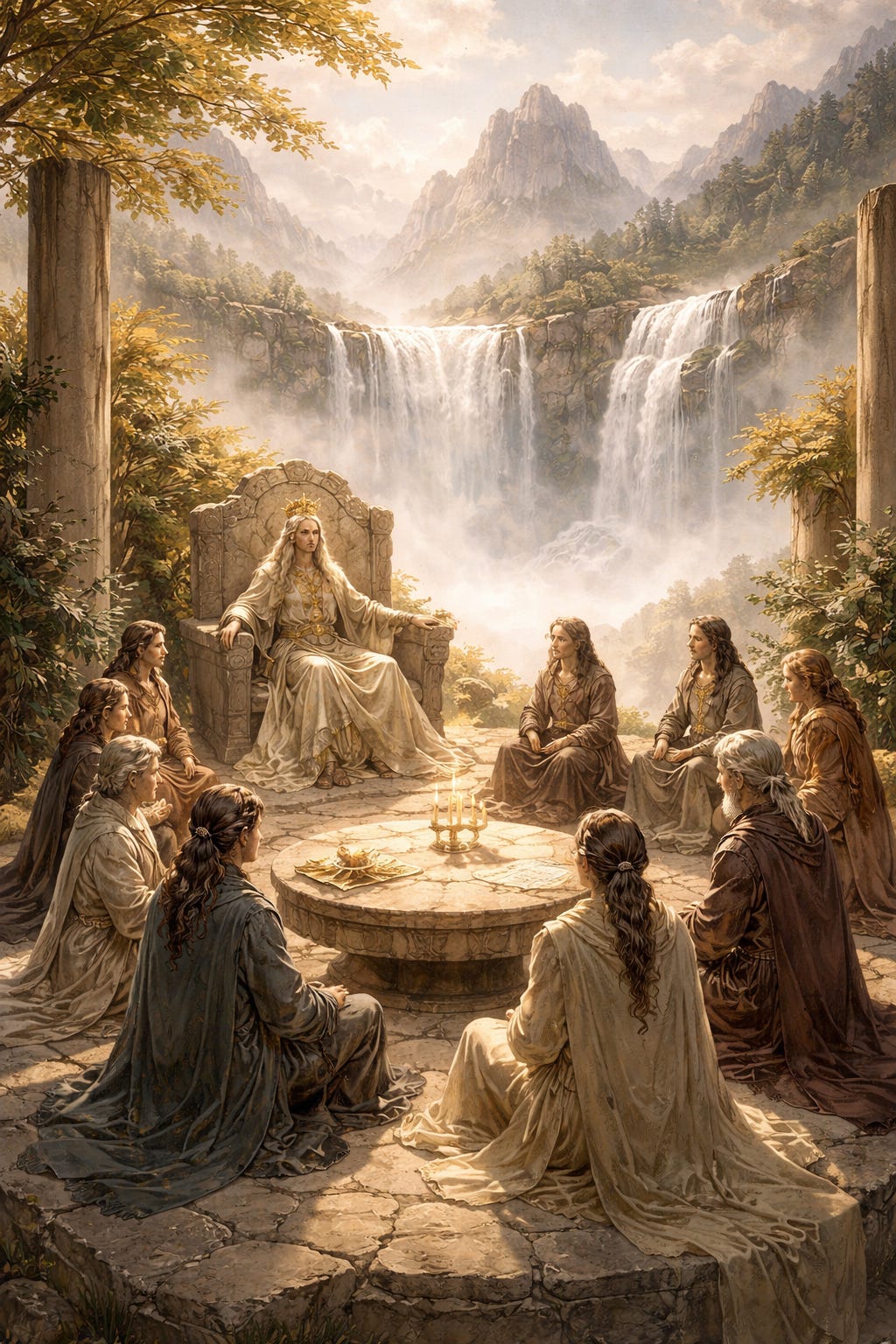
As alignment weakens, presence increases. Leaders become visible. Their intentions may still be good, but attention begins to shift. The work is no longer trusted to stand on its own. Guidance becomes more frequent. Praise follows. Authority starts to collect around the person rather than remain distributed through the whole.
When trust erodes further, fear enters. Rules multiply. Oversight tightens. People act carefully rather than naturally. Energy that once moved freely is redirected toward compliance. The ruler feels increasingly necessary, and the system increasingly fragile.
At the far end, authority must insist on itself. Words swell. Promises are repeated. Oaths appear. Faith is no longer assumed and so must be demanded. What began as leadership becomes noise, and noise attempts to replace trust.
Laotse noted something quieter beneath all of this. The more a ruler must speak, the less is being heard. When faith is present, few words are needed. When faith is absent, language works overtime to cover the gap.
The best rulers never confuse activity with effectiveness. They do not compete with those they lead. They do not rush to be seen. They understand that competence cannot be commanded into existence. It must be allowed to emerge, supported by clear conditions and timely restraint.
This is why, when the work is finished, no one looks upward. No monument is required. No name needs repeating. People recognize themselves in what has been accomplished and say, without irony or exaggeration, we have done it ourselves.
That sentence is not an illusion. It is the evidence. It shows that authority did not replace human capacity but made room for it. The ruler did not vanish, but neither did they stand in the way.
Such leadership leaves little behind to admire. And that is precisely why it endures.